- May 27, 2026
- Madre Janus
By Mr. Jithesh J.
Cybersecurity Analyst, Madre Janus
Artificial Intelligence has transformed how organizations operate. Teams now use AI tools for drafting emails, generating reports, analyzing data, coding, customer support, and automation. But alongside this productivity revolution, a hidden cybersecurity challenge is growing rapidly: Shadow AI.
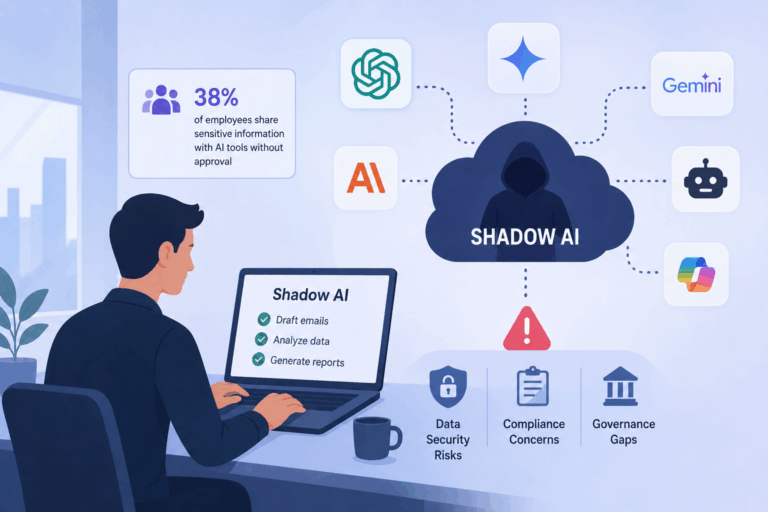
Employees increasingly adopt AI tools independently without approval from IT or security teams. While this often begins with good intentions, it creates governance gaps, compliance concerns, and data security risks that many organizations are only beginning to understand. According to research, enterprise generative AI adoption rose dramatically between 2023 and 2024, creating a parallel rise in unsanctioned AI usage. Over 38% of employees acknowledge sharing sensitive work information with AI tools without employer approval.
This article explains Shadow AI, its relationship with Shadow IT, why it matters now more than ever, real-world implications, and practical recommendations enterprises can implement immediately.
What Is Shadow AI?
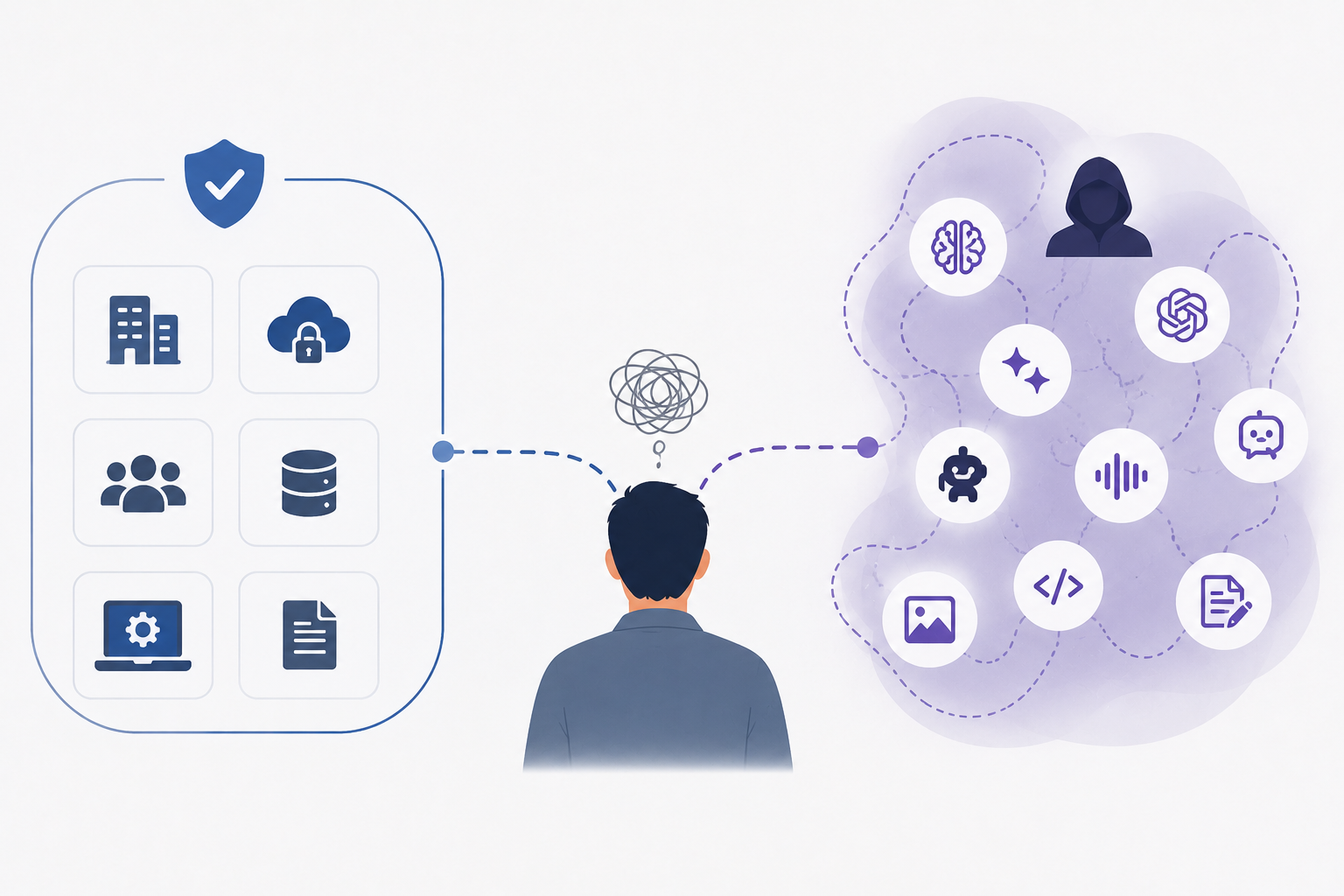
Shadow AI refers to the unauthorized or unsanctioned use of Artificial Intelligence tools, platforms, or applications within an organization without formal IT oversight or approval.
Examples include:
- Employees uploading confidential documents into public AI tools
- Teams using personal AI subscriptions for work tasks
- Developers leveraging unapproved AI coding assistants
- Departments deploying AI automation software outside governance frameworks
- Staff using browser AI extensions that process enterprise data
A common example is an employee using public generative AI to summarize customer information or generate business reports without realizing organizational data policies may be violated.
The problem is rarely malicious.
People adopt Shadow AI because it improves speed, productivity, and efficiency.
The challenge emerges when innovation moves faster than governance.

What Is Shadow IT?
Shadow IT refers to software, hardware, cloud services, or technology systems introduced into an organization without approval or visibility from IT departments.
Examples include:
- Personal cloud storage platforms
- Unauthorized project management tools
- External collaboration software
- Unapproved SaaS subscriptions
- Personal file-sharing systems
Shadow IT has existed for years.
Employees often adopt tools because approved systems feel slow, restrictive, or insufficient.
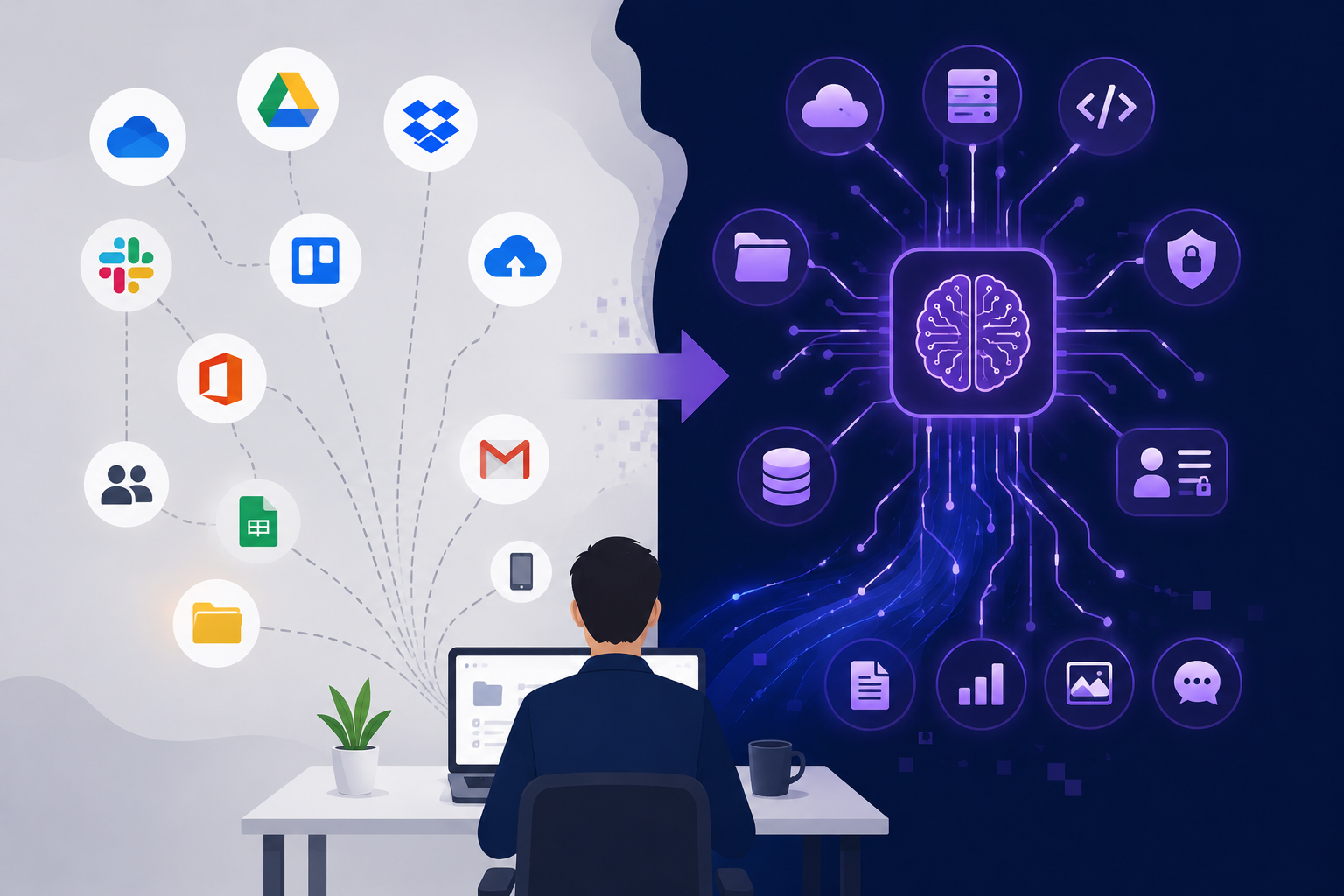
Shadow AI is effectively an evolution of Shadow IT but introduces more complex risks because AI systems actively process, retain, and generate information.
Shadow AI vs Shadow IT: Understanding the Difference
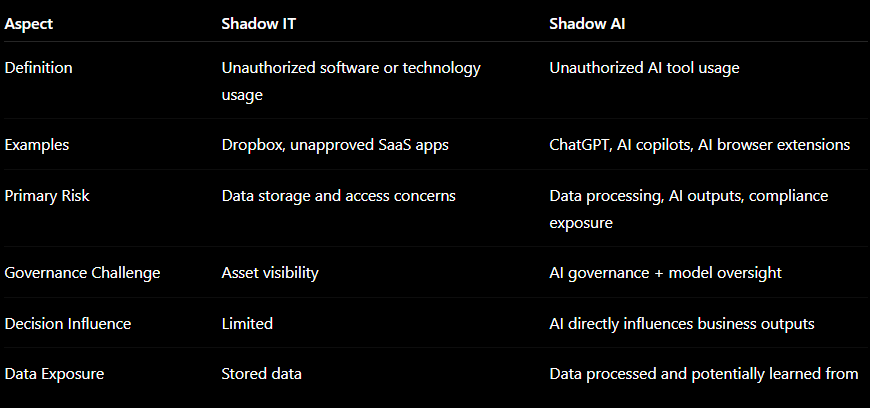
Shadow IT primarily concerns infrastructure visibility.
Shadow AI concerns visibility plus intelligence processing risk.
When employees input confidential enterprise information into external AI systems, organizations may lose visibility into how that information is stored, processed, or retained.
Why Shadow AI Matters More Than Ever
The urgency around Shadow AI is growing because AI adoption is accelerating faster than enterprise governance.
Recent research highlights the scale:
- Enterprise AI usage has become nearly universal, with employee adoption growing significantly year over year.
- Unauthorized AI usage has become one of the leading causes of non-malicious enterprise data exposure.
- Studies suggest over 80% of employees use unapproved AI tools in some environments.
- Gartner predicts over 40% of enterprises could experience security or compliance incidents linked to Shadow AI by 2030.
- Senior leadership is not immune. Research indicates executives may bypass approved governance controls when productivity gains outweigh perceived risks.
AI adoption has outpaced enterprise security maturity.
That gap creates Shadow AI.
Key Risks Associated With Shadow AI
1. Data Leakage
Employees may unknowingly upload:
- Customer information
- Financial records
- Proprietary code
- Strategic business documents
- Internal operational data
Once sensitive enterprise information enters unauthorized systems, visibility and control may diminish significantly.
2. Regulatory Compliance Violations
Organizations operating under regulatory frameworks face additional exposure:
- GDPR obligations
- Data sovereignty requirements
- Industry compliance frameworks
- Privacy regulations
Unauthorized AI processing can create governance blind spots that compliance teams cannot monitor effectively.
3. Increased Cybersecurity Risk
Cybersecurity teams cannot secure assets they cannot see.
Unauthorized AI tools expand the attack surface by introducing:
- Unknown integrations
- Third-party APIs
- Browser extensions
- External processing environments
Recent cybersecurity reporting shows AI-related risks increasingly influence enterprise breach patterns.
4. Inaccurate Decision-Making
AI-generated outputs can contain:
- Hallucinated information
- Incomplete analysis
- Bias
- Outdated context
Without governance and validation frameworks, AI-driven decisions may introduce operational risk.
5. Reputation Damage
A single incident involving sensitive enterprise data exposure can impact:
- Customer trust
- Brand credibility
- Stakeholder confidence
Governance failures increasingly become business failures.

Shadow AI Case Study: How Productivity Can Become Risk
Scenario
A mid-sized engineering organization introduces approved AI capabilities for internal workflows.
However, employees find sanctioned systems restrictive.
Marketing teams begin using public AI tools for content creation.
Developers leverage personal AI coding assistants.
Operations staff upload spreadsheets into external AI platforms for faster analysis.
Initially, productivity improves.
Over time:
- Sensitive internal documents move into unauthorized systems
- Compliance visibility decreases
- IT teams lose tool oversight
- Data governance becomes fragmented
This mirrors patterns increasingly observed across industries where employee productivity demand outpaces governance maturity. Research indicates organizations experiencing unmanaged Shadow AI environments can face substantially higher breach costs. Some industry analyses estimate approximately $670,000 additional breach-related impact associated with Shadow AI exposure.
The lesson:
Innovation without governance creates operational risk.
Countermeasures: How Organizations Can Reduce Shadow AI Risk
Build Clear AI Governance Policies
Organizations need documented guidance covering:
- Approved AI tools
- Data classification policies
- AI usage boundaries
- Disclosure requirements
- Approval workflows
Policy ambiguity fuels Shadow AI adoption.
Provide Approved AI Alternatives
Banning AI rarely works.
Studies indicate employees continue using AI tools even after restrictions if approved alternatives fail operational needs.
Enable secure enterprise AI options instead.
Employee Awareness Training
Security awareness must evolve beyond phishing.
Teams need education around:
- AI risks
- Sensitive data handling
- Prompt security
- Approved AI workflows
Governance improves when awareness improves.
Strengthen Visibility and Monitoring
Organizations should implement:
- AI application discovery mechanisms
- Network monitoring
- Data Loss Prevention (DLP)
- Browser security controls
- AI governance platforms
Visibility remains the first layer of defense.
Conduct Regular AI Audits
Periodic reviews identify:
- Unauthorized tools
- Risk exposure areas
- Governance gaps
- Compliance weaknesses
Security teams cannot manage unknown AI adoption patterns.
The Future of Enterprise Security Includes AI Governance
Shadow AI is not merely an IT issue.
It is a business resilience issue.
Organizations embracing AI responsibly will gain operational advantages while reducing risk exposure.
The goal is not preventing AI adoption.
The goal is enabling innovation safely.
As AI becomes embedded across business operations, governance frameworks will increasingly differentiate resilient enterprises from vulnerable ones.
Forward-looking organizations are already moving beyond reactive security toward structured AI visibility, governance, and operational intelligence.
Organizations prioritizing stronger governance frameworks, operational visibility, and cybersecurity resilience will be better positioned to manage emerging AI risks. At Madre Janus, this evolving landscape reinforces the importance of building secure, governance-driven approaches that enable enterprises to innovate confidently.
Because the future belongs not to organizations that adopt AI fastest.
It belongs to organizations that adopt AI smartest.