- June 14, 2026
- Madre Janus
Healthcare cyber resilience is no longer just an IT priority. In 2026, it has become a strategic imperative for healthcare organizations worldwide as ransomware attacks intensify, connected medical devices expand the attack surface, and cyber incidents increasingly threaten patient care. Organizations that invest in resilience today are not only protecting sensitive data but also ensuring operational continuity, patient trust, and long-term growth.
Why Healthcare is at the center of the Cybersecurity Conversation
Healthcare is unlike any other industry when it comes to cybersecurity.
A cyber incident in manufacturing may delay production. A cyber incident in retail may disrupt transactions. But in healthcare, the consequences can directly affect patient care, clinical operations, and public trust.
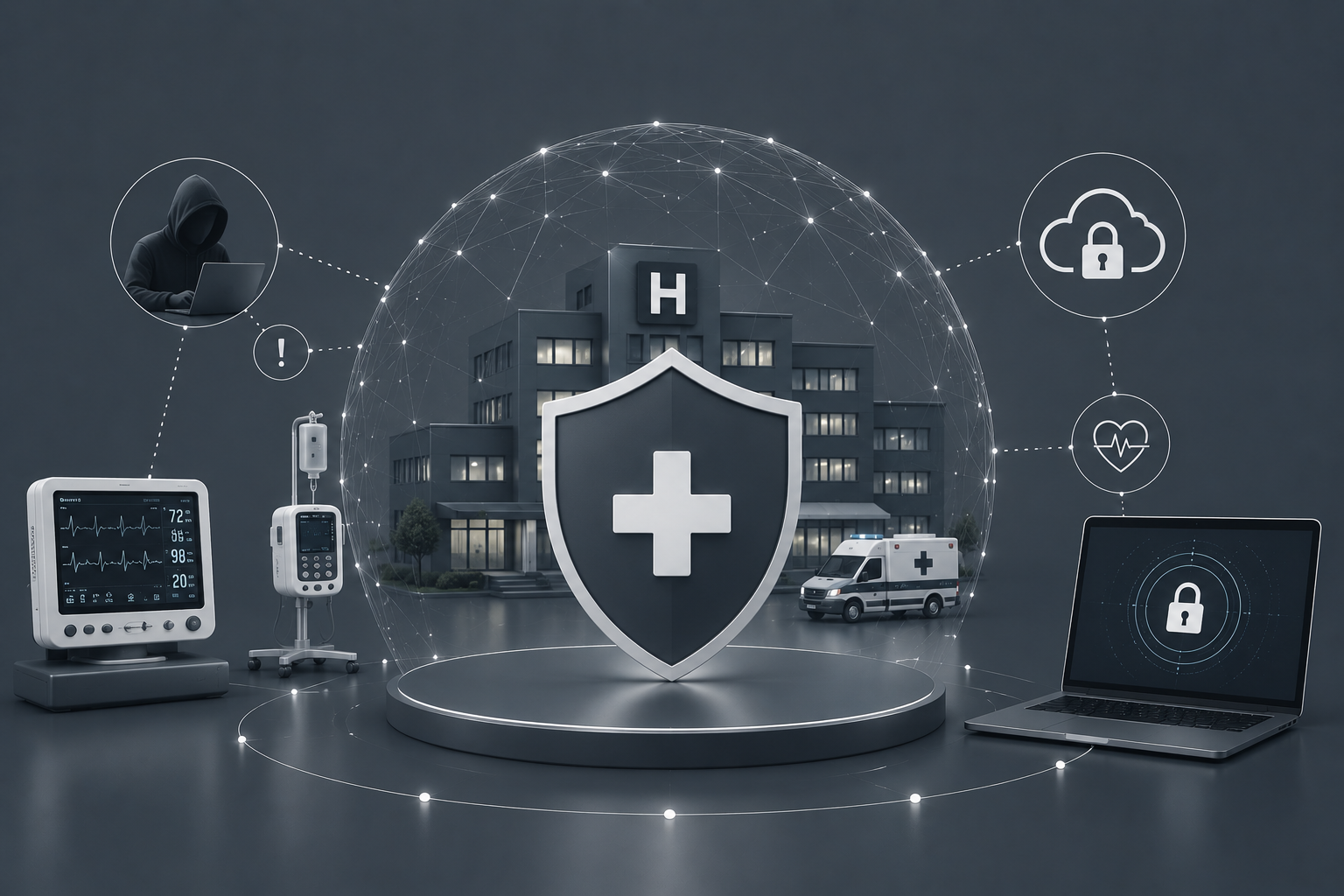
The healthcare ecosystem has become increasingly interconnected over the past decade. Hospitals now rely on electronic health records, telemedicine platforms, cloud applications, AI-powered diagnostics, and connected medical devices to deliver care efficiently. While these innovations have transformed patient outcomes, they have also expanded the attack surface considerably.
Cybersecurity is no longer just a technical concern for IT teams. It is a boardroom discussion involving hospital leaders, clinicians, operations teams, and risk managers. The question is no longer whether healthcare organizations will face cyber threats, but whether they are prepared to withstand and recover from them.
This is where healthcare cyber resilience becomes critical.
What is Healthcare Cyber Resilience?
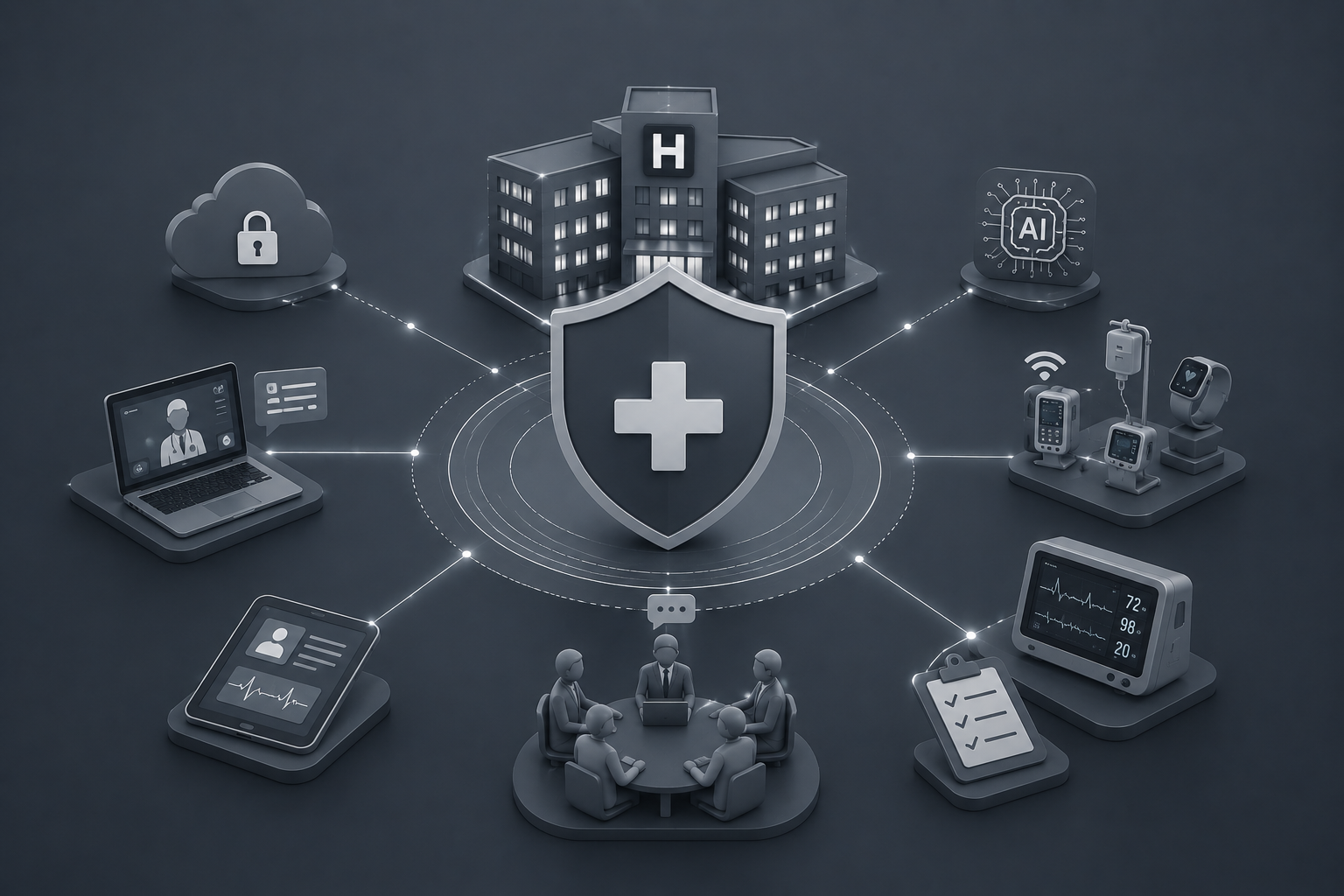
Healthcare cyber resilience is the ability of an organization to anticipate, withstand, recover from, and adapt to cyber incidents while continuing to deliver safe and uninterrupted patient care.
Traditional cybersecurity focuses on preventing attacks.
Cyber resilience goes a step further.
It assumes that attacks may happen despite the best security measures and focuses on ensuring that healthcare operations continue even during disruption.
A cyber resilient healthcare organization is one that can:
- Detect threats early
- Limit the spread of attacks
- Maintain critical services
- Recover systems quickly
- Learn from incidents and improve continuously
In 2026, this approach is becoming the foundation of healthcare cybersecurity strategies worldwide.
Ransomware is Changing the Rules
Ransomware remains one of the most significant threats facing healthcare organizations.
What makes ransomware particularly dangerous is not just the encryption of files. Modern ransomware groups are sophisticated operations that combine data theft, extortion, and operational disruption.
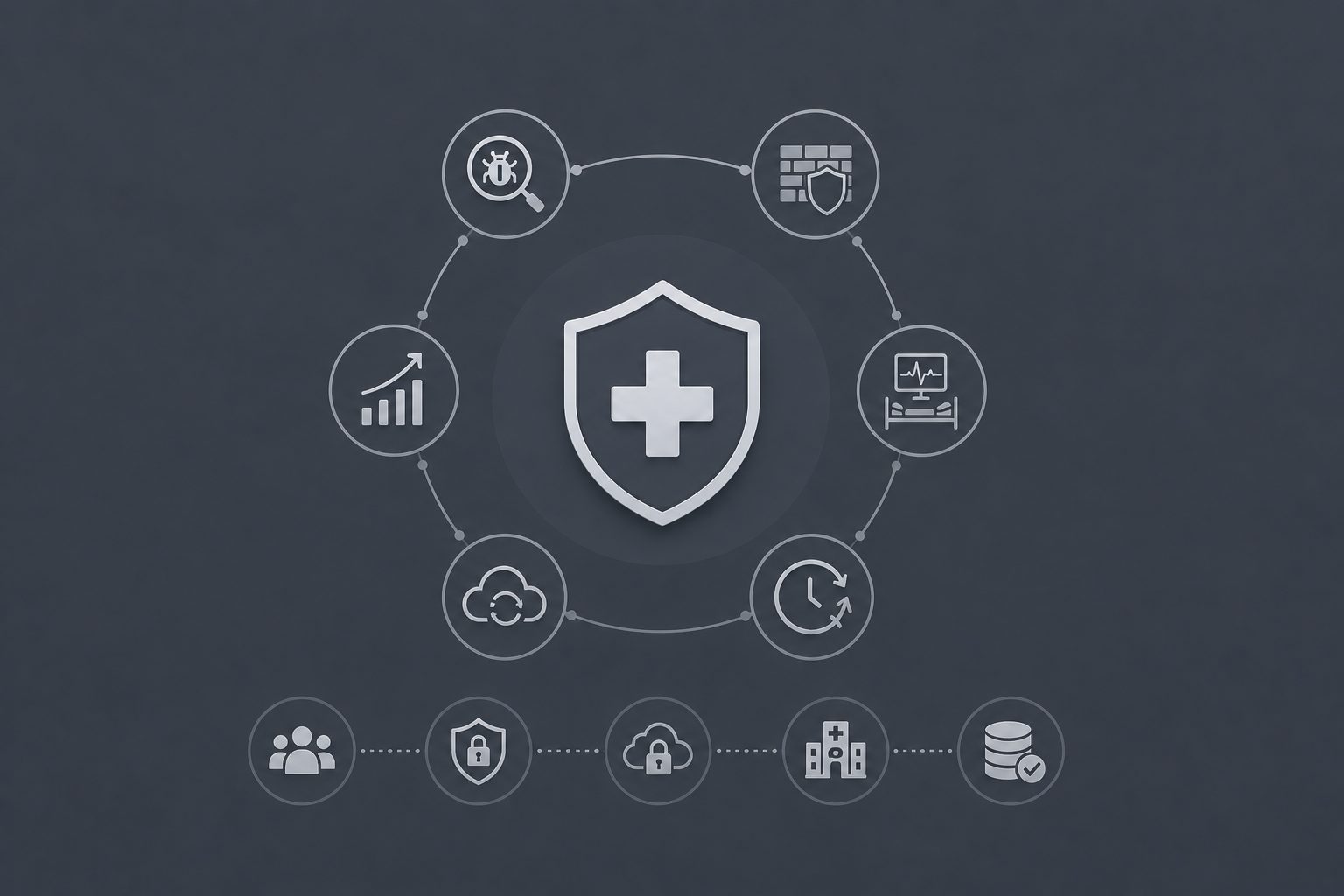
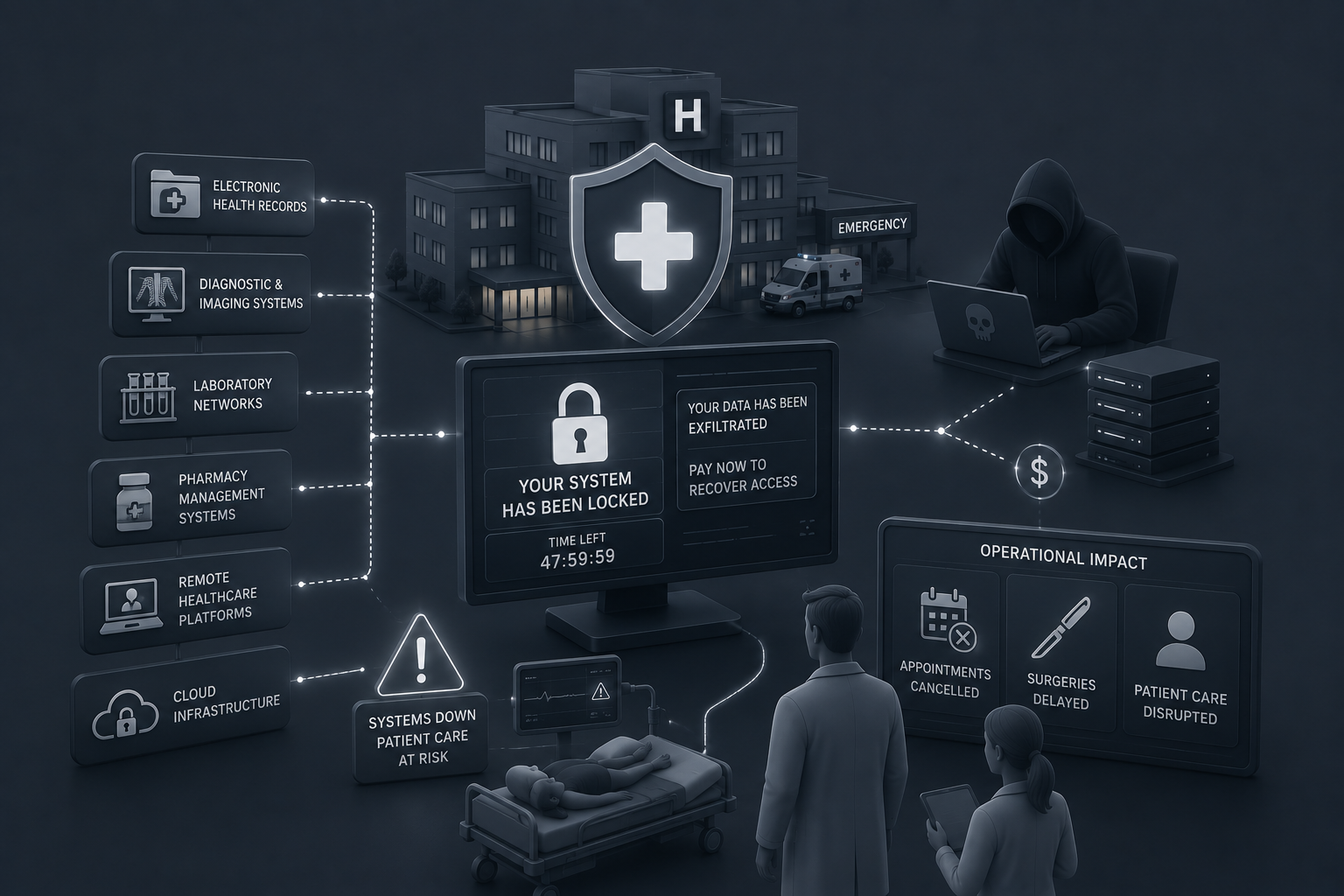
Attackers increasingly target:
- Electronic Health Records (EHR)
- Diagnostic and imaging systems
- Laboratory networks
- Pharmacy management systems
- Remote healthcare platforms
- Cloud infrastructure
Healthcare organizations are especially vulnerable because downtime is not simply inconvenient.
When clinical systems become unavailable, appointments may be cancelled, surgeries delayed, and patient care disrupted.
This operational urgency creates pressure to restore systems quickly, which is why healthcare remains an attractive target for cybercriminals.
Cyber resilience helps healthcare organizations prepare for these scenarios by ensuring they have the capabilities to detect, respond, and recover effectively.
Connected Medical Devices are Expanding the Attack Surface
Modern healthcare relies heavily on connected technology.
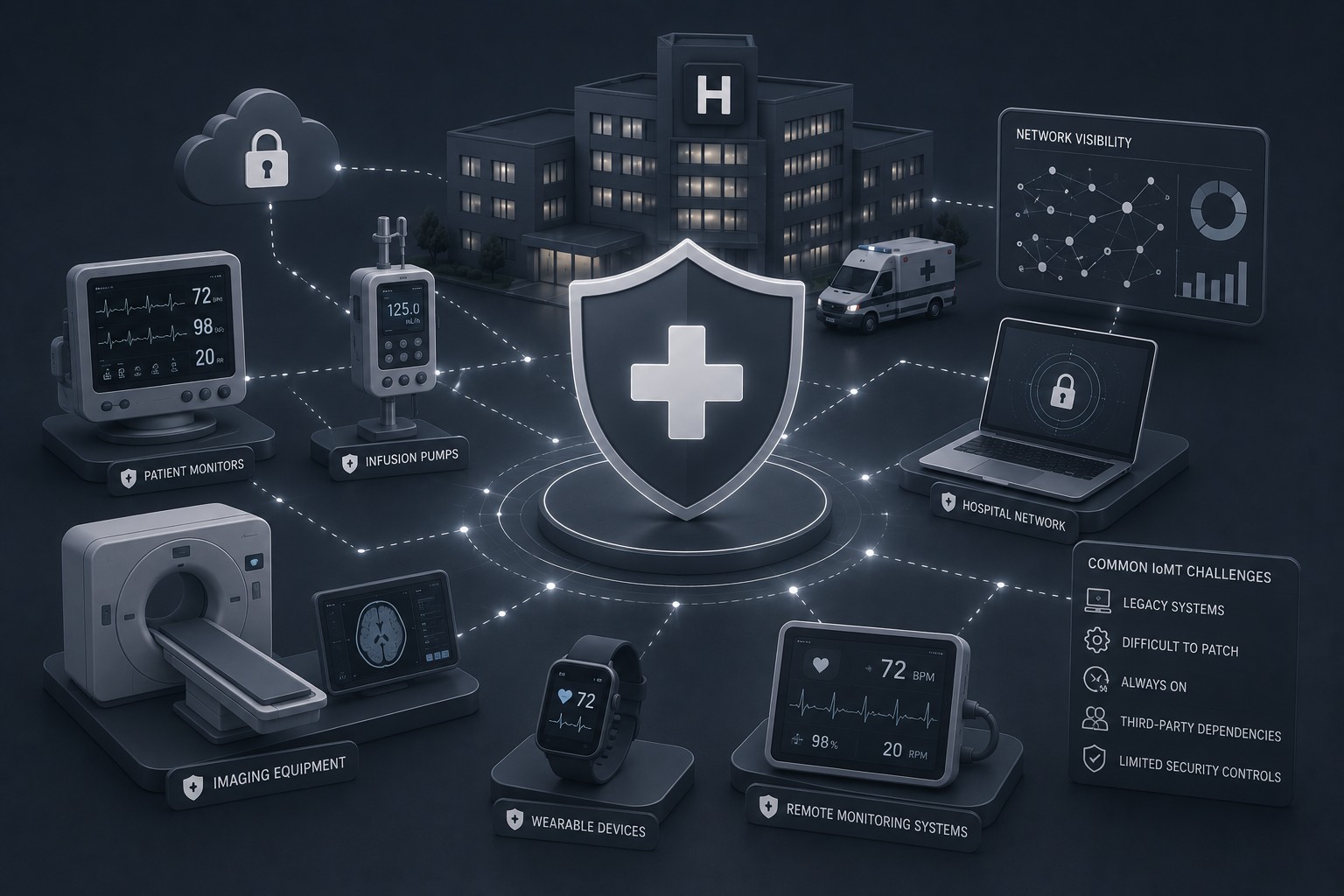
Medical devices such as patient monitors, infusion pumps, imaging equipment, wearable devices, and remote monitoring systems now communicate continuously with hospital networks and cloud environments.
This ecosystem, commonly known as the Internet of Medical Things (IoMT), is improving healthcare delivery at an unprecedented scale.
However, it also introduces significant cybersecurity challenges.
Many connected devices:
- Run legacy operating systems
- Cannot be patched easily
- Operate continuously without downtime
- Depend on third-party vendors
- Lack advanced security controls
A single vulnerable device can provide attackers with a pathway into larger healthcare networks.
Healthcare organizations therefore need visibility across both traditional IT environments and clinical technologies.
Cyber resilience means understanding that security must extend beyond servers and laptops to include every connected asset involved in patient care.
Cloud and AI are Creating New Security Challenges
Healthcare is undergoing a rapid digital transformation.
Cloud adoption has accelerated.
Artificial intelligence is becoming an integral part of diagnostics, patient engagement, clinical decision-making, and operational efficiency.
These technologies offer immense benefits.
But they also introduce new risks.
Healthcare organizations must now manage:
- Cloud misconfigurations
- Identity and access risks
- Third-party application vulnerabilities
- Data privacy concerns
- AI model security
- Expanding digital ecosystems
Cyber resilience requires organizations to think beyond perimeter security.
It requires a security strategy built around:
- Zero Trust principles
- Continuous monitoring
- Identity-first security
- Secure cloud architectures
- Data protection and governance
As healthcare becomes more digital, resilience becomes increasingly important.
Why Cyber Resilience Is Different From Cybersecurity
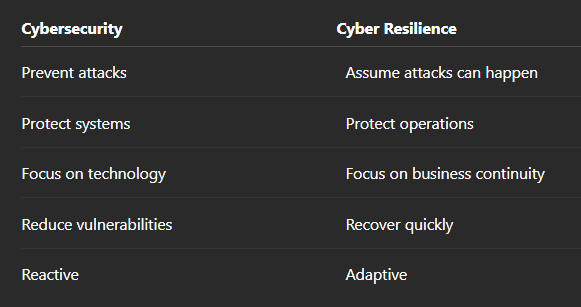
Cybersecurity and cyber resilience are closely related, but they are not the same.
Cybersecurity focuses primarily on preventing attacks.
Cyber resilience focuses on ensuring organizations can continue operating even when attacks succeed.
This shift in mindset is one of the biggest changes shaping healthcare security in 2026.
The most resilient healthcare organizations are not necessarily those with the most tools.
They are the organizations that prepare for disruption, practice recovery, and adapt continuously.
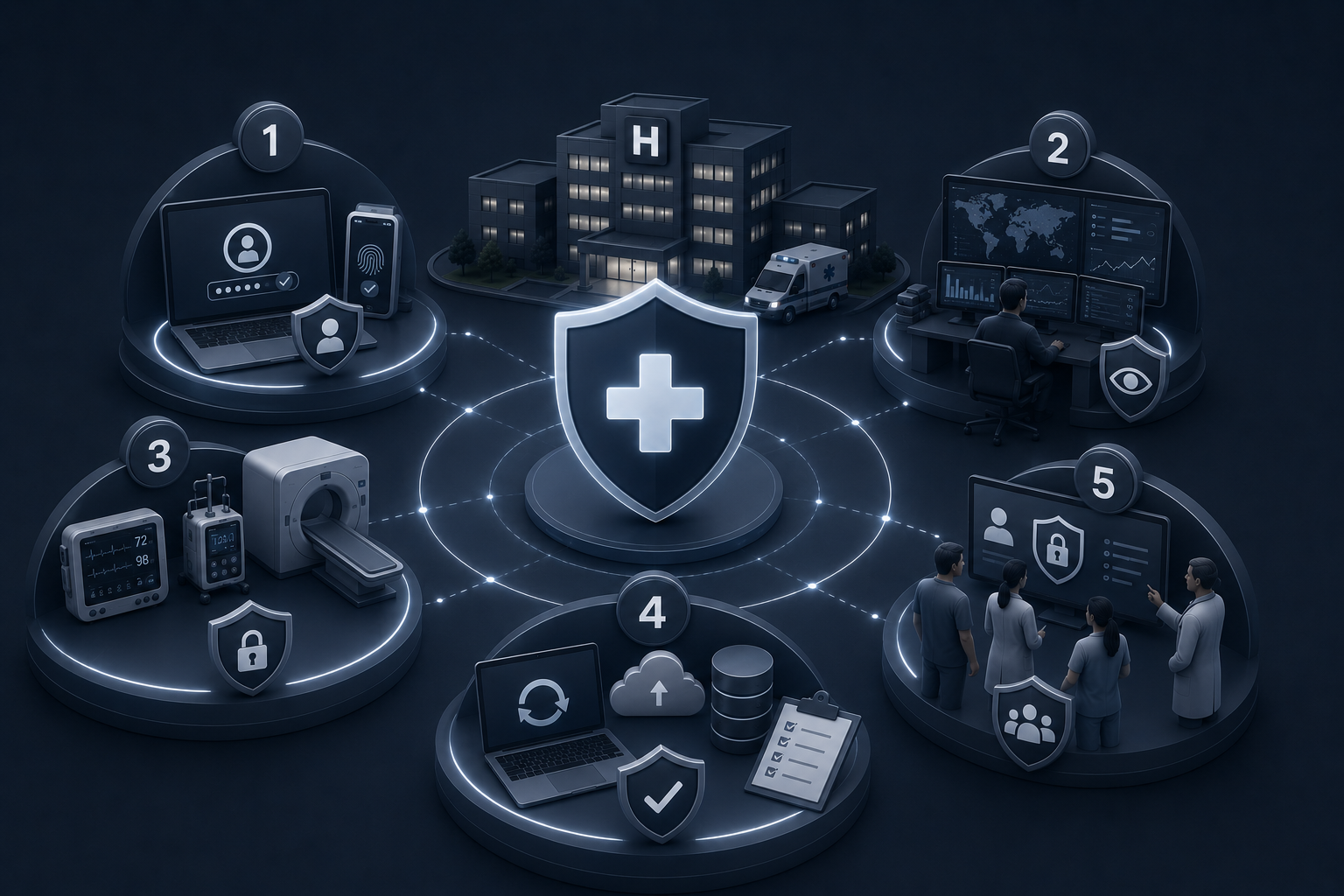
The Five Pillars of Healthcare Cyber Resilience
Building cyber resilience is an ongoing process.
Healthcare organizations should focus on five key pillars.
1. Identity and Access Management
Identity remains one of the most targeted attack vectors.
Strong identity security includes:
- Multi-factor authentication
- Privileged access management
- Single sign-on
- Identity governance
- Continuous authentication
Protecting identities helps reduce the risk of unauthorized access and credential-based attacks.
2. Continuous Threat Monitoring
Healthcare organizations require visibility into their entire environment.
Continuous monitoring enables teams to:
- Detect suspicious activity
- Identify vulnerabilities
- Investigate incidents faster
- Reduce attacker dwell time
Security Operations Centers (SOC), Managed Detection and Response (MDR), and threat intelligence capabilities are becoming increasingly important components of healthcare security programs.
3. Medical Device Security
Medical devices can no longer be treated as isolated systems.
Healthcare organizations should:
- Maintain device inventories
- Segment networks
- Monitor device behavior
- Work closely with manufacturers
- Implement vulnerability management processes
Visibility across medical devices is essential for reducing cyber risk.
4. Incident Response and Recovery
Preparedness is critical.
Healthcare organizations should regularly test:
- Incident response plans
- Ransomware recovery procedures
- Backup and restoration capabilities
- Crisis communication plans
- Business continuity strategies
Organizations that prepare in advance recover faster and minimize disruption.
5. Security Awareness and Culture
Technology alone cannot create resilience.
Healthcare leaders must build a culture where cybersecurity is everyone’s responsibility.
This includes:
- Regular awareness training
- Executive involvement
- Cross-functional collaboration
- Continuous education
- Clear accountability
A resilient culture strengthens every other aspect of cybersecurity.
Cyber Resilience Is Becoming a Competitive Advantage
Healthcare cyber resilience is often viewed as a defensive investment.
In reality, it creates strategic advantages.
Resilient healthcare organizations are better positioned to:
- Deliver uninterrupted patient care
- Strengthen patient trust
- Accelerate digital transformation
- Meet regulatory expectations
- Protect organizational reputation
- Innovate with confidence
As healthcare continues to evolve, resilience will become a defining characteristic of industry leaders.
The organizations that invest today will be better prepared to navigate tomorrow’s challenges.
Conclusion
Healthcare cyber resilience is no longer a future aspiration.
It is a present-day necessity.
As ransomware attacks evolve, connected medical devices proliferate, and healthcare ecosystems become increasingly digital, organizations must rethink how they approach cybersecurity.
The most resilient healthcare organizations will not be those that avoid every attack.
They will be the ones that can anticipate threats, withstand disruption, recover quickly, and continue delivering exceptional patient care.
In 2026 and beyond, healthcare cyber resilience is not simply a security objective.
It is a strategic imperative.
Frequently Asked Questions
What is healthcare cyber resilience?
Healthcare cyber resilience is the ability of healthcare organizations to prepare for, withstand, recover from, and adapt to cyber incidents while maintaining safe and uninterrupted patient care.
Why is cyber resilience important in healthcare?
Cyber resilience is important because healthcare organizations rely on interconnected systems and medical devices that are increasingly targeted by cyber threats. Resilience ensures organizations can continue operating even during cyber incidents.
How is cyber resilience different from cybersecurity?
Cybersecurity focuses on preventing attacks, while cyber resilience focuses on maintaining operations and recovering quickly if an attack occurs.
What are the biggest cyber threats facing healthcare in 2026?
The biggest threats include ransomware, attacks on connected medical devices, cloud security risks, identity-based attacks, and vulnerabilities within third-party healthcare ecosystems.
How can healthcare organizations improve cyber resilience?
Healthcare organizations can improve cyber resilience by strengthening identity security, implementing continuous monitoring, securing medical devices, preparing incident response plans, and building a strong cybersecurity culture.